Sottogola degli elmetti MKII MKII helmet chinstraps
Durante la Seconda guerra mondiale furono utilizzate due principali tipologie di sottogola sugli elmetti MKII degli eserciti inglese, canadese, sudafricano e neozelandese: il modello MKII, variante più solida del modello MKI della Prima guerra mondiale, e il modello MKIII, più semplificato e con fibbia di scorrimento laterale. A questi si aggiungono varianti e produzioni nazionali, da valutare sempre nel contesto dell'elmetto. During the Second World War, two main types of chinstrap were used on MKII helmets by the British, Canadian, South African and New Zealand armies: the MKII type, a more robust version of the First World War MKI model, and the simplified MKIII type with a side buckle. National variants and productions must always be evaluated in the context of the helmet.
Sottogola modello MKII MKII chinstrap model
Modello MKII inglese
Il modello MKII, prodotto a partire da gennaio 1938, è sicuramente il sottogola più comune della
Seconda guerra mondiale. È formato da tre sezioni: le due estremità, costituite da due anelli in ottone
collegati da due molle rivestite in stoffa, e la parte centrale, costituita da due cinghiette regolabili tramite
fibbia. I due anelli di fissaggio ai ganci del guscio sono in ottone, mentre le quattro molle interne sono in
acciaio inossidabile amagnetico.
British MKII model
The MKII model, produced from January 1938, is undoubtedly the most common chinstrap of the Second World War.
It is made up of three sections: the two ends, each consisting of a brass ring connected by two fabric-covered
springs, and the central section, consisting of two straps adjustable by means of a buckle. The two rings used
to attach the chinstrap to the shell hooks are made of brass, while the four inner springs are made of
non-magnetic stainless steel.
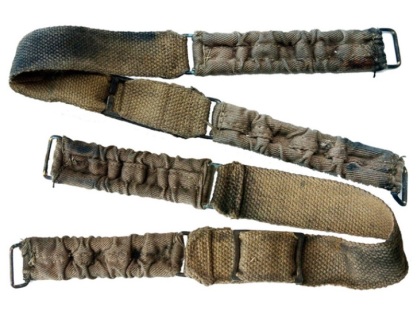
Sottogola modello MKII / MKII chinstrap model
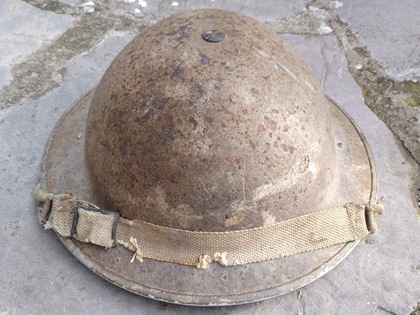
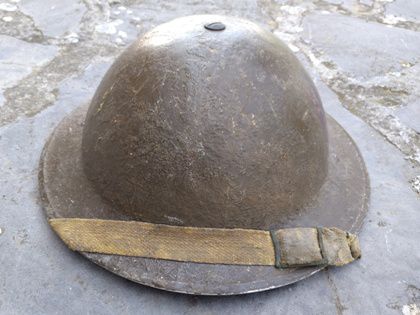
Due esempi di sottogola MKII fissati nella falda frontale dell'elmetto. /
Two examples of MKII chinstraps fastened on the front brim of the helmet.


Dettaglio di fibbie MKII: a sinistra fibbia in bronzo, a destra fibbia in acciaio. /
Detail of MKII buckles: bronze buckle on the left, steel buckle on the right.

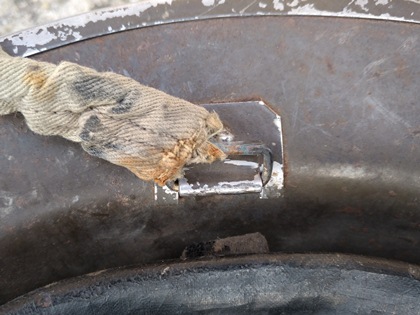
Anelli di fissaggio del sottogola MKII su ganci del primo tipo. /
MKII chinstrap attachment rings on early-type hooks.
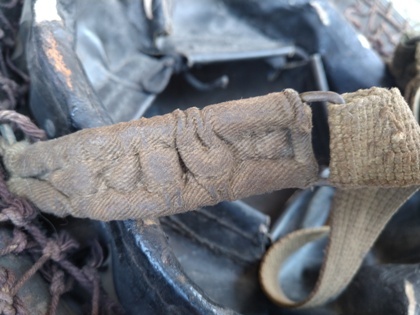

A sinistra l'anello tra la sezione con molle e la fascia centrale; a destra dettaglio delle molle in un sottogola MKII. /
Left: the connecting ring between the spring section and the central strap; right: detail of the springs in an MKII chinstrap.
Le molle in acciaio magnetico sono invece associate ai sottogola MKIIA, praticamente identici al modello MKII ma destinati all'uso Home Front. Questi sottogola possono presentare timbri a forma di stella o con la lettera "M" sulla stoffa. Magnetic steel springs are associated with MKIIA chinstraps, virtually identical to the MKII model but intended for Home Front use. These chinstraps may have star-shaped stamps or an "M" stamped on the fabric.


A sinistra: Reggio, settembre 1943, uso regolare del sottogola MKII. A destra: area del Sangro, novembre 1943, sottogola MKII fissato nella falda posteriore. /
Left: Reggio, September 1943, regular use of the MKII chinstrap. Right: Sangro area, November 1943, MKII chinstrap fastened on the rear brim.
Sottogola MKII canadesi Canadian MKII chinstraps
I sottogola prodotti in Canada dalla Backstay Standards possono presentare il timbro con la Broad Arrow canadese impresso sulla stoffa. I sottogola canadesi sono noti montati d'epoca su elmetti di produzione canadese. Sono note due varianti del marchio Broad Arrow: la classica canadese nera e l'equivalente con marchio in negativo. Chinstraps manufactured in Canada by Backstay Standards may have the Canadian Broad Arrow stamped on the fabric. Canadian chinstraps are known to have been fitted in period on Canadian-made helmets. Two variants of the Broad Arrow are known: the classic black Canadian mark and the equivalent with a negative stamp.
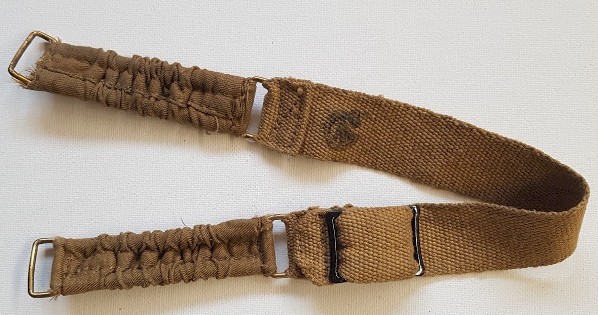
Sottogola MKII di fabbricazione canadese. / Canadian-made MKII chinstrap.
Sottogola MKII neozelandesi New Zealand MKII chinstraps
Il modello MKII neozelandese è praticamente identico al modello inglese, ma non presenta le due molle in acciaio inossidabile amagnetico nelle sezioni laterali, che sono invece realizzate con tessuto elasticizzato. Questo tipo di sottogola venne assemblato sia su gusci MKII neozelandesi sia su gusci MKII inglesi in uso alle truppe neozelandesi. Allo stesso tempo è molto comune trovare gusci MKII neozelandesi con sottogola MKII e MKIII di fabbricazione inglese. The New Zealand MKII model is virtually identical to the British model, except that it does not have the two non-magnetic stainless-steel springs in the side sections, which are instead made of stretch fabric. This type of chinstrap was fitted both to New Zealand MKII shells and to British MKII shells used by New Zealand troops. It is also very common to find New Zealand MKII shells fitted with British MKII and MKIII chinstraps.
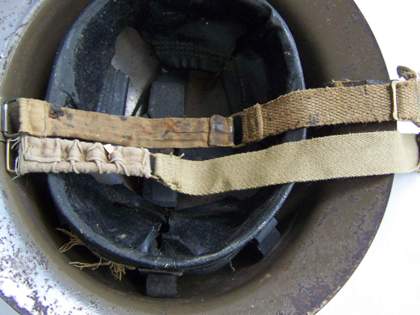
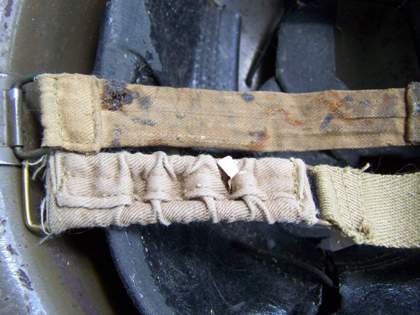
Confronto tra sottogola MKII neozelandese e inglese. /
Comparison between New Zealand and British MKII chinstraps.

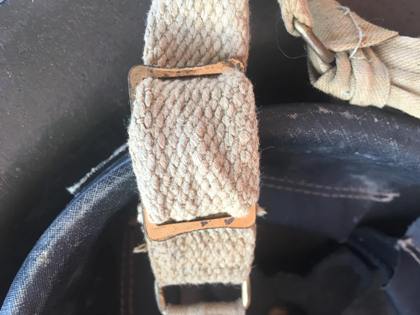
Dettaglio di una sezione laterale elastica e della fibbia. /
Detail of an elastic side section and buckle.


Soldati neozelandesi del 28th Maori Battalion a Camp Maadi, Egitto, 1942; dettaglio di un MKII neozelandese con sottogola inglese. /
New Zealand soldiers of the 28th Maori Battalion at Camp Maadi, Egypt, 1942; detail of a New Zealand MKII with British chinstrap.
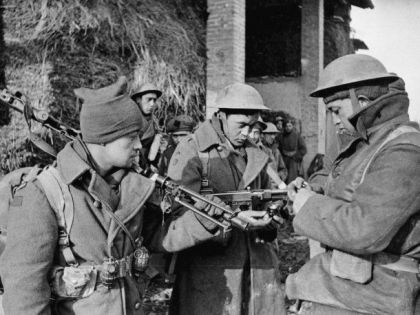
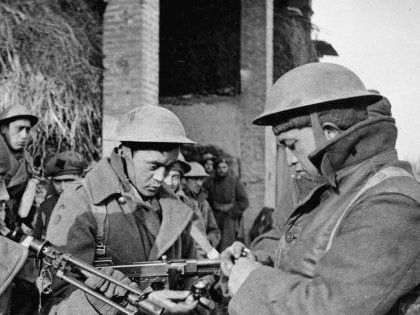
Members of the Maori Battalion, Faenza, Italy, 1945: dettaglio con sottogola MKIII inglese e sottogola MKII neozelandese. /
Members of the Maori Battalion, Faenza, Italy, 1945: detail with British MKIII chinstrap and New Zealand MKII chinstrap.
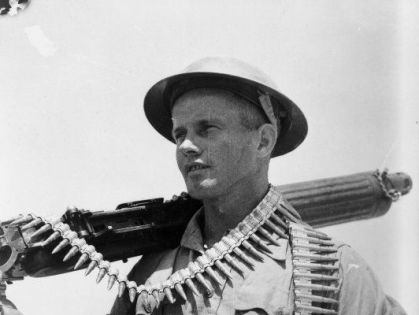
Jim Dempsey, 24 Battalion, Helwan Camp, Egypt, 1941, con sottogola MKII neozelandese. /
Jim Dempsey, 24 Battalion, Helwan Camp, Egypt, 1941, with New Zealand MKII chinstrap.
Sottogola MKII australiani Australian MKII chinstraps
Non è stata recuperata documentazione certa su un'eventuale produzione australiana del sottogola modello MKII. Sono però noti sottogola MKII con timbri di controllo di chiara fattura australiana, con le classiche due lettere identificative dell'operatore, analoghe a quelle ampiamente riscontrabili sui gusci australiani. No reliable documentation has been found for a possible Australian production of the MKII chinstrap model. However, MKII chinstraps are known with clearly Australian control stamps, using the classic two letters identifying the operator, similar to those widely seen on Australian shells.
Sottogola MKII sudafricani South African MKII chinstraps
Su molti elmetti sudafricani si riscontrano sottogola MKII con fibbia arrugginita, elemento osservato in particolare sugli MKII sudafricani. L'ipotesi più probabile è che si tratti di una produzione interna realizzata con materiale magnetico, ma ad oggi non esistono prove documentarie definitive. Sugli elmetti sudafricani bellici il sottogola è normalmente MKII, salvo eventuali sostituzioni sul campo. Many South African helmets show MKII chinstraps with a rusty buckle, a feature observed in particular on South African MKII helmets. The most likely hypothesis is an in-house production using magnetic material, although no definitive documentary evidence is currently known. Wartime South African helmets normally have an MKII chinstrap, unless replaced in the field.
Sottogola modello MKIII MKIII chinstrap model
Per ridurre i costi e l'uso di acciaio amagnetico, nel marzo 1941 venne introdotto il nuovo modello di sottogola denominato MKIII. Era molto più semplice del precedente e realizzato con tessuto elasticizzato. Da un lato il sottogola è cucito su un anello in ottone da fissare al gancio del guscio, mentre dall'altro lato è regolato tramite una fibbia autobloccante. Questo modello venne usato in ogni fase della Campagna d'Italia e si trova su elmetti MKII, MKIII e RAC. Non è noto un suo uso bellico su elmetti MKII sudafricani. To reduce costs and the use of non-magnetic steel, a new chinstrap model called the MKIII was introduced in March 1941. It was much simpler than its predecessor and was made from stretch fabric. On one side the chinstrap is sewn to a brass ring that attaches to the shell hook, while on the other side it is adjusted by means of a self-locking buckle. This model was used in every phase of the Italian Campaign and can be found on MKII, MKIII and RAC helmets. It is not known to have been used on South African MKII helmets during the war.
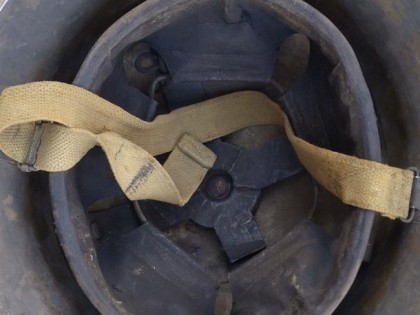
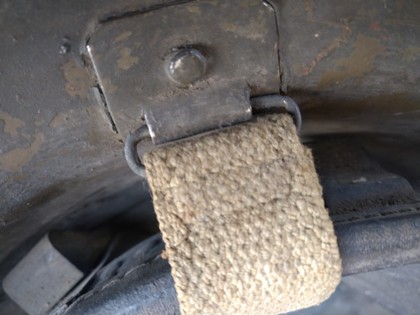
Sottogola MKIII montato sull'elmetto e dettaglio della fibbia fissa. /
MKIII chinstrap fitted on the helmet and detail of the fixed buckle.
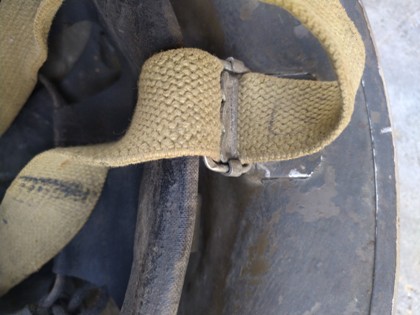

Dettagli della fibbia di scorrimento del sottogola MKIII. /
Details of the sliding buckle of the MKIII chinstrap.

Sottogola modello MKIII / MKIII chinstrap model
Sottogola modello MKIIIa MKIIIa chinstrap model
Nel gennaio 1943, per ridurre la quantità di gomma utilizzata nel sottogola MKIII, venne introdotto il modello MKIIIa, nel quale la parte centrale tra i due anelli aggiuntivi era realizzata in stoffa non elastica. Questo sottogola fu prodotto in piccole quantità e risulta poco comune. È ipotizzabile che sia stato distribuito sia per usi interni sia per usi esterni. In January 1943, to reduce the amount of rubber used in the MKIII chinstrap, the MKIIIa model was introduced. In this version, the central section between the two additional rings was made of non-elastic fabric. This chinstrap was produced in small quantities and is uncommon. It is possible that it was distributed for both internal and external use.
Elmetti MKII - Note tecniche ed usi militari MKII helmets - Technical information and military uses
Quanto riportato in questa pagina ha carattere generale e introduttivo. Per un'analisi più dettagliata,
completa e sistematica dei sottogola e degli altri componenti degli elmetti MKII, rimando al volume
Elmetti MKII - Note tecniche ed usi militari. Seconda edizione rivista ed ampliata. Disponibile
Editore: Autopubblicato
Data di pubblicazione: 2024
Lingua: Italiano o Inglese
Copertina flessibile: 220 pagine
ISBN-13: 979-1221073294
Per informazioni: danielepiselli@hotmail.com
The information on this page is general and introductory. For a more detailed, complete and systematic analysis
of chinstraps and the other components of MKII helmets, please refer to the volume
MKII helmets - Technical information and military uses. Revised and Expanded Second Edition. Available
Self-published
Publication date: 2024
Language: Italian or English
Paperback: 220 pages
ISBN-13: 979-1221073294
For information: danielepiselli@hotmail.com

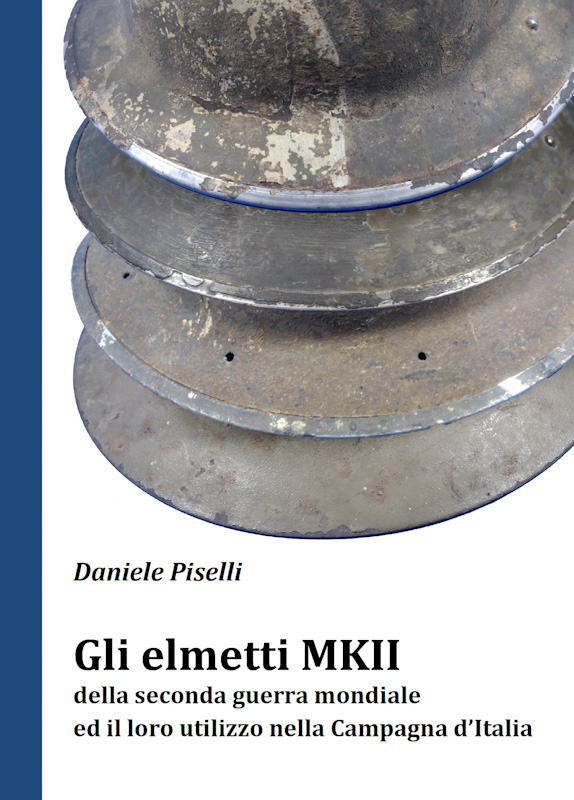
Gli elmetti MKII della seconda guerra mondiale ed il loro utilizzo nella Campagna d'Italia MKII helmets of the Second World War and their use in the Italian Campaign
Il primo libro, Gli elmetti MKII della seconda guerra mondiale ed il loro utilizzo nella Campagna d'Italia,
non è più disponibile ed è indicato qui come riferimento. Il volume nasceva come guida per chi si avvicinava
al collezionismo degli elmetti MKII e voleva orientarsi tra usi bellici, usi postbellici, falsi, manomissioni e reperti
ancora capaci di raccontare la propria storia.
Editore: Autopubblicato
Data di pubblicazione: 2020
EAN: 9791220064101
ISBN: 1220064106
Pagine: 128
Formato: brossura
The first book, MKII helmets of the Second World War and their use in the Italian Campaign,
is no longer available and is listed here as a reference. The volume was conceived as a guide for collectors
approaching MKII helmets, helping them navigate wartime use, post-war use, fakes, alterations and original pieces
still able to tell their history.
Self-published
Publication date: 2020
EAN: 9791220064101
ISBN: 1220064106
Pages: 128
Format: paperback
Riferimenti References
Collezione privata Daniele Piselli.
Riferimenti principali: sito IWM, world-war-helmets, documentazione e ricerca personale confluite nei volumi
Gli elmetti MKII della seconda guerra mondiale ed il loro utilizzo nella Campagna d'Italia ed
Elmetti MKII - Note tecniche ed usi militari.
Private collection Daniele Piselli.
Main references: IWM website, world-war-helmets, documentation and personal research included in the volumes
MKII helmets of the Second World War and their use in the Italian Campaign and
MKII helmets - Technical information and military uses.

