Struttura base degli elmetti MKII WW2 - Gusci Basic structure of MKII helmets WWII - Shells
I gusci degli elmetti MKII utilizzati dalle forze armate inglesi e del Commonwealth durante la Seconda guerra mondiale sono molto simili tra loro, ma presentano alcune peculiarità che ne permettono la rapida classificazione, oltre naturalmente ai marchi dei produttori.
Prendendo come base il guscio inglese, i gusci canadesi sono praticamente identici per forma generale e per la presenza dell'anello di acciaio inossidabile amagnetico nel bordo; differiscono invece nei marchi dei produttori e in altri dettagli costruttivi. I gusci sudafricani, anch'essi con anello in acciaio inossidabile amagnetico, sono facilmente riconoscibili per la presenza dei tre fori sulla falda posteriore. I gusci australiani e quelli utilizzati per gli elmetti neozelandesi, di fabbricazione australiana, non presentano invece l'anello in acciaio applicato al bordo.
The shells of the MKII helmets used by the British and Commonwealth forces during the Second World War are very similar to each other, but they have specific features that allow a quick classification, in addition to the manufacturers' marks.
Taking the British shell as a reference, Canadian shells are almost identical in general shape and also have the non-magnetic stainless-steel rim; they differ mainly in the manufacturers' markings and in other construction details. South African shells, also with a non-magnetic stainless-steel rim, are easily recognisable by the three holes in the rear brim. Australian shells and those used for New Zealand MKII helmets, which were manufactured in Australia, do not have the applied steel rim.

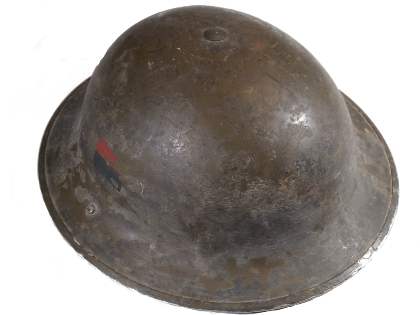
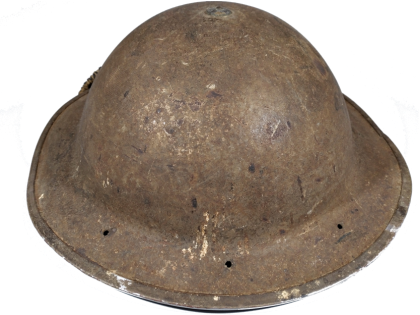
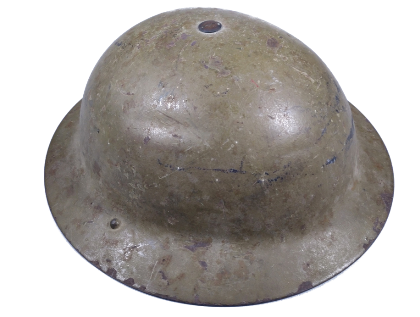
Dall'alto verso il basso, da sinistra a destra: MKII inglese con anello in acciaio inossidabile amagnetico, MKII canadese della stessa tipologia generale, MKII sudafricano con i tre fori caratteristici, MKII neozelandese su guscio australiano senza anello applicato al bordo. / From top to bottom, left to right: British MKII with non-magnetic stainless-steel rim, Canadian MKII of the same general type, South African MKII with the characteristic three holes, New Zealand MKII on an Australian shell without applied rim.
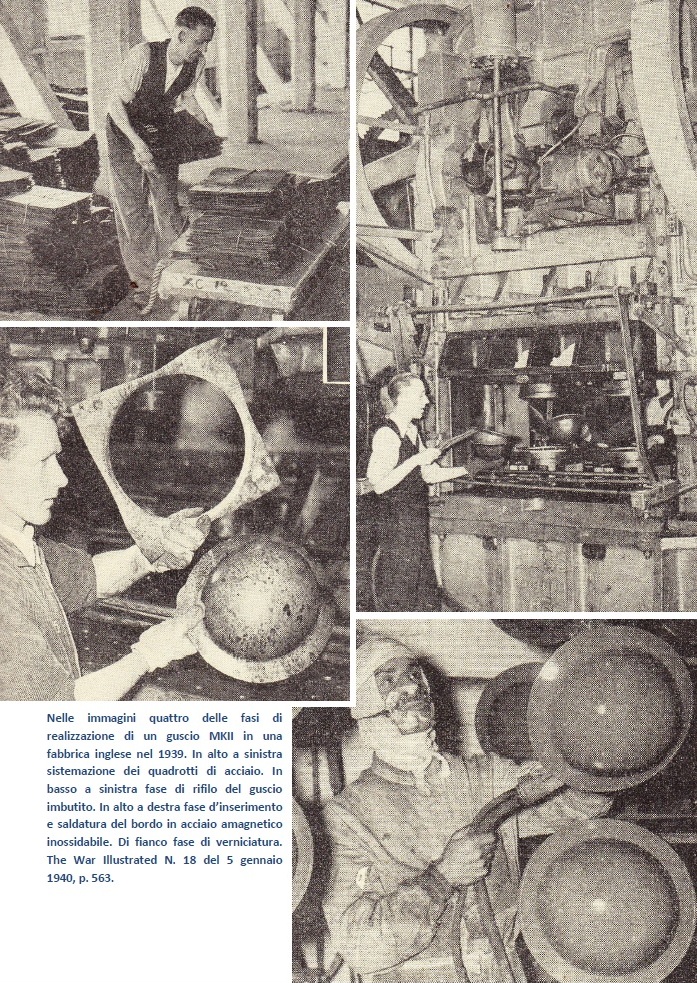
Gusci di elmetti MKII inglesi WW2 British MKII helmet shells WW2
Nei marchi degli elmetti MKII inglesi sono riportate solitamente le seguenti informazioni:
• sigla del produttore;
• anno di fabbricazione;
• riferimento del lotto produttivo, numerico, alfanumerico o di sole lettere;
• modello del guscio, dove si possono trovare i caratteri I o 1 per il modello MKI, II o 2 per il modello MKII. Ad oggi non è nota una differenza sostanziale tra queste indicazioni di modello.
The markings on British MKII helmets usually include the following information:
• manufacturer's code;
• year of manufacture;
• production batch reference, numeric, alphanumeric, or letters only;
• shell model, where the characters I or 1 can be found for the MKI model, and II or 2 for the MKII model. At present, no substantial difference is known between these model indications.
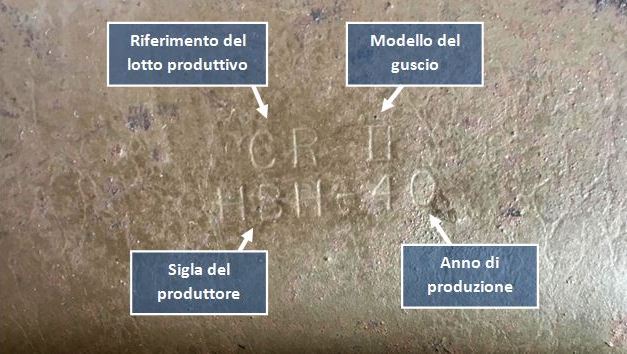
Esempio di marcatura di un elmetto MKII: produttore HBH, anno 1940, lotto CR e modello MKII. / Example of an MKII helmet marking: HBH manufacturer, 1940, CR lot and MKII shell model.
I primi elmetti MKII di fabbricazione inglese possono avere, internamente al guscio, la sigla SS (Stainless Steel, acciaio inossidabile) applicata a tampone con vernice bianca. Questa marcatura serviva a distinguere il materiale dell'anello esterno, differenziando questi gusci dai precedenti MKI* con anello magnetico, spesso marchiati con il carattere M. Early British-made MKII helmets may have the SS marking (Stainless Steel) applied inside the shell with white paint. This marking indicated the material of the outer rim and distinguished these shells from earlier MKI* helmets with a magnetic rim, often marked with the letter M.
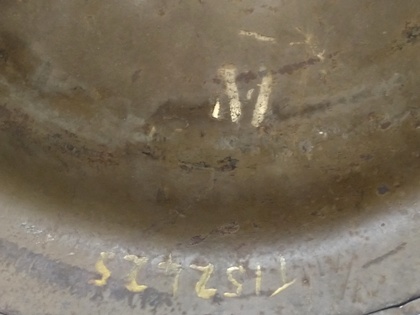
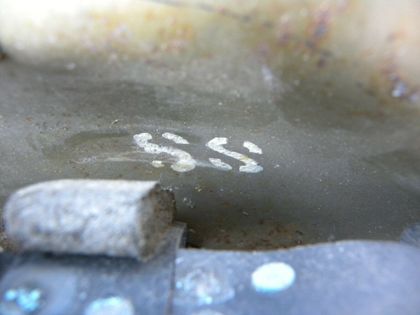
A sinistra marchio "M"; a destra marchio "SS". / On the left, "M" marking; on the right, "SS" marking.
.jpg)
A sinistra dettaglio del bordo amagnetico in acciaio inossidabile del modello MKII; a destra dettaglio del bordo magnetico del modello MKI*, riconoscibile anche per la ruggine. / On the left, detail of the non-magnetic stainless-steel rim of the MKII model; on the right, detail of the magnetic rim of the MKI* model, also recognisable by rust.
Di seguito l'elenco dei produttori di gusci MKII inglesi. Le date di inizio e fine produzione possono essere aggiornate, poiché derivano dall'analisi di elmetti bellici di collezioni private, aste online e altri riscontri:
• AMC = Austin Motor Co Ltd., Cowley, Inghilterra. Produttore nel 1941
• BMB = Briggs Motor Bodies Ltd., Dagenham, Inghilterra. Produttore dal 1939 al 1944
• CS = Clydesdale Stamping Co Ltd., Dudley, Inghilterra. Produttore dal 1939 al 1941
• EB = Evenson Brothers, Worcester, Inghilterra. Produttore dal 1939 al 1943
• EC&CO o EC = E Camelinat & Co Ltd., Birmingham, Inghilterra. Produttore dal 1939 al 1944
• F&L o FL = Fisher & Ludlow Ltd., Dudley, Inghilterra. Produttore dal 1939 al 1944
• HBH = Harrison Bros & Howson Ltd., Sheffield, Inghilterra. Produttore dal 1938 al 1943
• JSS = Joseph Sankey & Sons Ltd., Bilston, Inghilterra. Produttore dal 1938 al 1941
• RO&CO o RO.CO = Rubery Owen & Co Ltd., Darleston, Inghilterra. Produttore dal 1939 al 1943
• SC = Steel Ceilings, Hayes, Inghilterra. Produttore dal 1939 al 1940
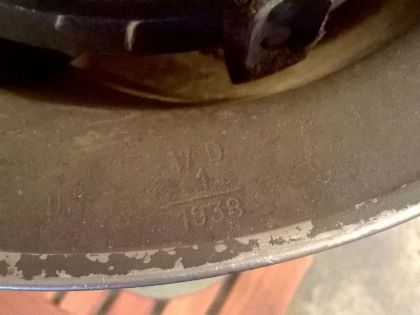
• WD o VD = William Dodson & Sons, Birmingham, Inghilterra. Produttore dal 1938 al 1941
Below is the list of British MKII shell manufacturers. The start and end dates of production may be updated, as they are based on the analysis of wartime helmets from private collections, online auctions and other evidence:
• AMC = Austin Motor Co Ltd., Cowley, England. Manufacturer in 1941
• BMB = Briggs Motor Bodies Ltd., Dagenham, England. Manufacturer from 1939 to 1944
• CS = Clydesdale Stamping Co Ltd., Dudley, England. Manufacturer from 1939 to 1941
• EB = Evenson Brothers, Worcester, England. Manufacturer from 1939 to 1943
• EC&CO or EC = E Camelinat & Co Ltd., Birmingham, England. Manufacturer from 1939 to 1944
• F&L or FL = Fisher & Ludlow Ltd., Dudley, England. Manufacturer from 1939 to 1944
• HBH = Harrison Bros & Howson Ltd., Sheffield, England. Manufacturer from 1938 to 1943
• JSS = Joseph Sankey & Sons Ltd., Bilston, England. Manufacturer from 1938 to 1941
• RO&CO or RO.CO = Rubery Owen & Co Ltd., Darleston, England. Manufacturer from 1939 to 1943
• SC = Steel Ceilings, Hayes, England. Manufacturer from 1939 to 1940
• WD or VD = William Dodson & Sons, Birmingham, England. Manufacturer from 1938 to 1941
Gusci di elmetti MKII canadesi WW2 Canadian MKII helmet shells WW2
Come detto, gli elmetti canadesi MKII hanno un aspetto molto simile agli MKII inglesi e presentano anch'essi l'anello di acciaio inossidabile amagnetico nel bordo. Qualora il marchio del produttore non fosse visibile, i gusci risultano comunque riconoscibili dal colore di fabbrica e dal tipo di ganci per sottogola, che presentano caratteristiche proprie.
Durante la Seconda guerra mondiale furono tre i produttori di gusci MKII canadesi:
• AG/C = Aluminum Goods Ltd, Toronto, Ontario, Canada. Produttore nel 1942
• CL/C = Canadian Motor Lamp Company, Windsor, Ontario, Canada. Produttore dal 1940 al 1943
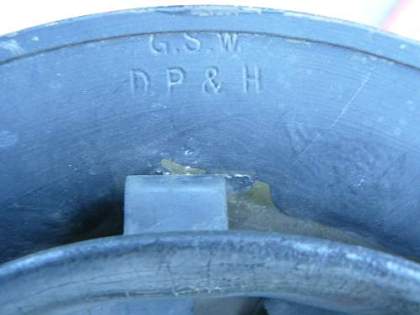
• GSW = General Steel Wares, Toronto, Ontario, Canada. Produttore dal 1940 al 1942
As mentioned, Canadian MKII helmets are very similar in appearance to British MKII helmets and also have the non-magnetic stainless-steel rim. If the manufacturer's mark is not visible, the shells can still be recognised by the factory colour and by the type of chinstrap hooks, which have their own distinctive features.
During the Second World War there were three Canadian manufacturers of MKII helmet shells:
• AG/C = Aluminum Goods Ltd, Toronto, Ontario, Canada. Manufacturer in 1942
• CL/C = Canadian Motor Lamp Company, Windsor, Ontario, Canada. Manufacturer from 1940 to 1943
• GSW = General Steel Wares, Toronto, Ontario, Canada. Manufacturer from 1940 to 1942
ATTENZIONE.
Il marchio del produttore GSW DP&H (General Steel Wares - Department of Pensions and Health) venne apposto su gusci destinati ad uso interno e mai inviati nei teatri di guerra.
ATTENTION.
The manufacturer's mark GSW DP&H (General Steel Wares - Department of Pensions and Health) was applied to shells intended for internal use and never sent to war theatres.
Gusci di elmetti MKII sudafricani WW2 South African MKII helmet shells WW2
I gusci MKII sudafricani sono molto simili agli inglesi, ma si distinguono per la presenza di tre fori sulla falda posteriore. Durante la Seconda guerra mondiale vi fu un solo produttore di MKII nell'Unione Sudafricana: TSP, Transvaal Steel Pressing Syndicate Ltd, Johannesburg, Unione Sudafricana. I gusci sono generalmente privi di data e, molto raramente, possono presentare un marchio costituito da una U con un rombo al centro oppure una broad arrow in prossimità dei ganci per sottogola. South African MKII shells are very similar to the British ones, but they are distinguished by the three holes in the rear brim. During the Second World War there was only one MKII manufacturer in the Union of South Africa: TSP, Transvaal Steel Pressing Syndicate Ltd, Johannesburg, Union of South Africa. The shells are generally undated and, very rarely, may show a mark consisting of a U with a diamond in the centre or a broad arrow near the chinstrap hooks.
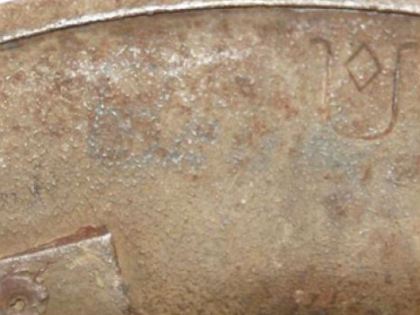
TSP = Transvaal Steel Pressing Syndicate Ltd, Johannesburg. / TSP = Transvaal Steel Pressing Syndicate Ltd, Johannesburg.
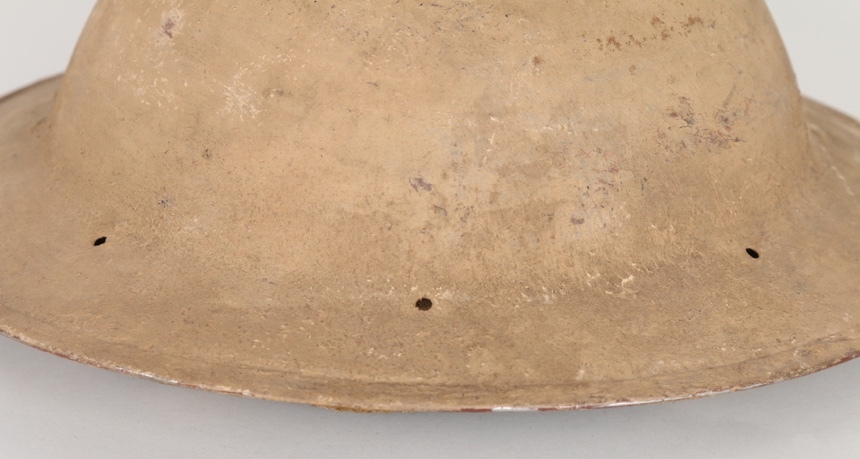
I tre fori caratteristici dei gusci sudafricani. / The three characteristic holes of South African shells.
La storia produttiva degli MKII sudafricani è particolarmente interessante. La Transvaal Steel Pressing Syndicate stampava e rifilava i gusci; successivamente venivano praticati i tre fori distintivi nel bordo posteriore, il foro centrale nella cupola per la vite di fissaggio del liner e i fori laterali per i ganci del sottogola. Il bordo in acciaio inossidabile amagnetico veniva quindi applicato e saldato a punti. I gusci erano poi inviati alla verniciatura e completati con i liner prodotti e montati da Jager Rand. The production history of South African MKII helmets is particularly interesting. The Transvaal Steel Pressing Syndicate pressed and trimmed the shells; the three distinctive holes were then punched in the rear brim, together with the central crown hole for the liner fixing bolt and the side holes for the chinstrap hooks. The non-magnetic stainless-steel rim was then fitted and spot welded. The shells were sent for painting and completed with liners manufactured and fitted by Jager Rand.
Gusci di elmetti MKII australiani WW2 Australian MKII helmet shells WW2
I gusci australiani furono stampati in lamiera di acciaio al manganese amagnetico e prodotti in un'unica misura. A differenza dei gusci inglesi e canadesi, non presentano l'anello in acciaio applicato al bordo. Durante la Seconda guerra mondiale i produttori di gusci australiani furono due e indicarono nel marchio soltanto la propria sigla e il lotto produttivo, senza indicazione della data o del modello:
• CS = Commonwealth Steel Company Pty Limited, Australia. Produttore dal 1940 al 1942
• L = Lysaght, Newcastle, Australia
Australian shells were stamped from non-magnetic manganese steel sheet and were produced in a single size. Unlike British and Canadian shells, they do not have the applied steel rim. During the Second World War there were two Australian shell manufacturers, both marking only their initials and the production batch, without indicating date or model:
• CS = Commonwealth Steel Company Pty Limited, Australia. Manufacturer from 1940 to 1942
• L = Lysaght, Newcastle, Australia
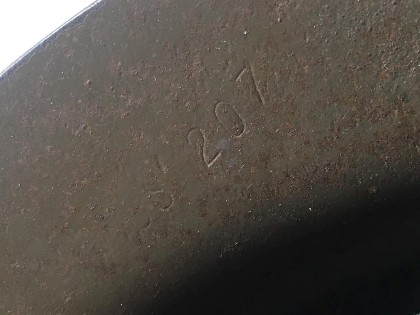
Guscio di produzione australiana marcato CS 207: Commonwealth Steel Company Pty Limited e lotto di produzione. / Australian-made shell marked CS 207: Commonwealth Steel Company Pty Limited and production lot.
Elmetti MKII neozelandesi WW2 New Zealand MKII helmets WW2
Durante la Seconda guerra mondiale la Nuova Zelanda non produsse gusci propri per elmetti MKII, ma assemblò elmetti utilizzando gusci australiani e ganci per sottogola prodotti dalla NZP, New Zealand Pressings, Auckland, nel 1941. Gli elmetti neozelandesi furono quindi assemblati su gusci australiani, in particolare del produttore CS (Commonwealth Steel Company Pty Limited), e come gli australiani non presentano l'anello di acciaio applicato al bordo. During the Second World War New Zealand did not manufacture its own MKII helmet shells, but assembled helmets using Australian shells and chinstrap hooks made by NZP, New Zealand Pressings, Auckland, in 1941. New Zealand helmets were therefore assembled on Australian shells, particularly from CS (Commonwealth Steel Company Pty Limited), and like Australian helmets they do not have the applied steel rim.
.jpeg)
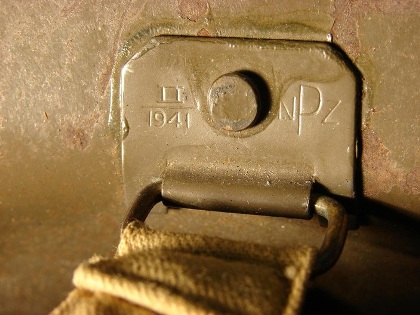
A sinistra dettaglio del bordo senza anello applicato; a destra gancio prodotto da New Zealand Pressings nel 1941. / On the left, detail of the rim without applied steel rim; on the right, hook produced by New Zealand Pressings in 1941.
Esempio di un elmo neozelandese / Example of a New Zealand helmet
ATTENZIONE: gusci destinati a Home Front e Difesa Civile ATTENTION: shells intended for Home Front and Civil Defence
Dalle ricerche condotte dall'Imperial War Museum è possibile ricostruire come, dopo l'evacuazione di Dunkirk nel giugno 1940, le Forze Armate imposero la propria priorità sulle forniture di elmetti MKII rispetto alle richieste di altre organizzazioni, compresi i servizi di Difesa Civile Home Front. A causa della carenza di elmetti per le Forze Armate, il Ministry of Supply sequestrò vaste scorte di elmetti. Gli elmetti che non rispettavano le specifiche militari vennero declassati come elmetti di grado 2 e assegnati alle organizzazioni di Difesa Civile.
Per distinguere gli elmetti MKII di grado 1, destinati alle Forze Armate, dagli MKII di grado 2 destinati alla Difesa Civile, vennero praticati fori sui bordi in prossimità dei ganci di fissaggio del sottogola. Gli elmetti di grado 2 vennero designati come Helmet Steel MKII No.2, mentre quelli realizzati in acciaio al manganese per i reparti militari erano indicati come Helmet Steel MKII No.1.
• MKII No.2A: scarti di acciaio manganese, colore tipico nero, 1 foro
• MKII No.2B: bordo in acciaio dolce, colore tipico grigio, 2 fori
• MKII No.2C: guscio in acciaio dolce, colore tipico grigio, 3 fori
• MKII No.2D: acciaio dolce, colore tipico grigio, 4 fori
Research by the Imperial War Museum shows that, after the evacuation of Dunkirk in June 1940, the Armed Forces gave priority to their own supply of MKII helmets over requests from other organisations, including Home Front Civil Defence services. Because of the shortage of helmets for the Armed Forces, the Ministry of Supply seized large stocks of helmets. Helmets that did not meet military specifications were downgraded as Grade 2 helmets and allocated to Civil Defence organisations.
To distinguish Grade 1 MKII helmets intended for the Armed Forces from Grade 2 MKII helmets intended for Civil Defence, holes were drilled in the rim near the chinstrap hook attachment points. Grade 2 helmets were designated Helmet Steel MKII No.2, while those made of manganese steel and intended for military units were designated Helmet Steel MKII No.1.
• MKII No.2A: manganese steel scraps, typical black colour, 1 hole
• MKII No.2B: mild steel rim, typical grey colour, 2 holes
• MKII No.2C: mild steel shell, typical grey colour, 3 holes
• MKII No.2D: mild steel, typical grey colour, 4 holes
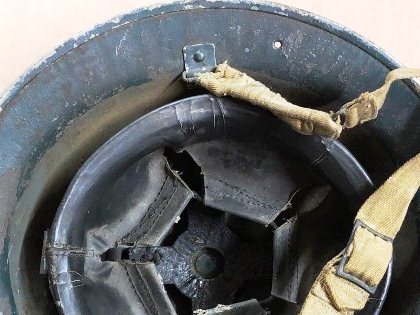
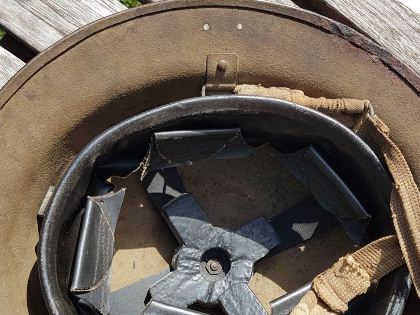
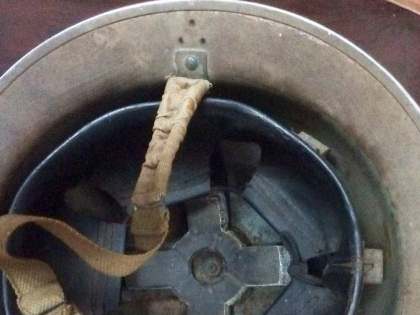
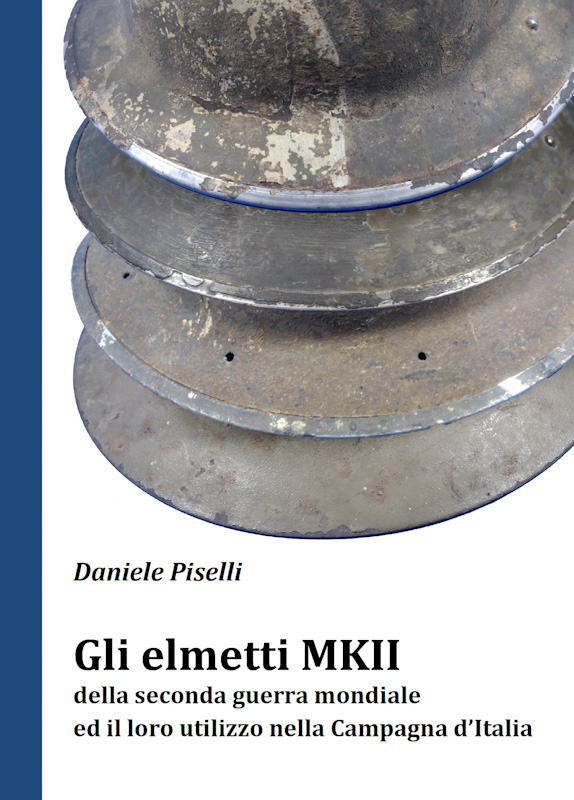
Dall'alto verso il basso: MKII No.2A con 1 foro, MKII No.2B con 2 fori, MKII No.2C con 3 fori, MKII No.2D con 4 fori. / From top to bottom: MKII No.2A with 1 hole, MKII No.2B with 2 holes, MKII No.2C with 3 holes, MKII No.2D with 4 holes.
Elmetti MKII - Note tecniche ed usi militari MKII helmets - Technical information and military uses
Quanto riportato in questa pagina ha carattere generale e introduttivo. Per un'analisi più dettagliata,
completa e sistematica dei gusci e degli altri componenti degli elmetti MKII, rimando al volume
Elmetti MKII - Note tecniche ed usi militari. Seconda edizione rivista ed ampliata. Disponibile
Editore: Autopubblicato
Data di pubblicazione: 2024
Lingua: Italiano o Inglese
Copertina flessibile: 220 pagine
ISBN-13: 979-1221073294
Per informazioni: danielepiselli@hotmail.com
The information on this page is general and introductory. For a more detailed, complete and systematic analysis
of shells and the other components of MKII helmets, please refer to the volume
MKII helmets - Technical information and military uses. Revised and Expanded Second Edition. Available
Self-published
Publication date: 2024
Language: Italian or English
Paperback: 220 pages
ISBN-13: 979-1221073294
For information: danielepiselli@hotmail.com

Gli elmetti MKII della seconda guerra mondiale ed il loro utilizzo nella Campagna d'Italia MKII helmets of the Second World War and their use in the Italian Campaign
Il primo libro, Gli elmetti MKII della seconda guerra mondiale ed il loro utilizzo nella Campagna d'Italia,
non è più disponibile ed è indicato qui come riferimento. Il volume nasceva come guida per chi si avvicinava
al collezionismo degli elmetti MKII e voleva orientarsi tra usi bellici, usi postbellici, falsi, manomissioni e reperti
ancora capaci di raccontare la propria storia.
Editore: Autopubblicato
Data di pubblicazione: 2020
EAN: 9791220064101
ISBN: 1220064106
Pagine: 128
Formato: brossura
The first book, MKII helmets of the Second World War and their use in the Italian Campaign,
is no longer available and is listed here as a reference. The volume was conceived as a guide for collectors
approaching MKII helmets, helping them navigate wartime use, post-war use, fakes, alterations and original pieces
still able to tell their history.
Self-published
Publication date: 2020
EAN: 9791220064101
ISBN: 1220064106
Pages: 128
Format: paperback
Riferimenti References
Collezione privata Daniele Piselli.
Riferimenti principali: sito IWM, world-war-helmets, documentazione e ricerca personale confluite nei volumi
Gli elmetti MKII della seconda guerra mondiale ed il loro utilizzo nella Campagna d'Italia ed
Elmetti MKII - Note tecniche ed usi militari.
Private collection Daniele Piselli.
Main references: IWM website, world-war-helmets, documentation and personal research included in the volumes
MKII helmets of the Second World War and their use in the Italian Campaign and
MKII helmets - Technical information and military uses.

